
How to Build Your Reading Intervention Schedule in the First Month of School
School is back in session! Let the hustle and bustle of the new school year begin.
While classroom teachers are busy getting to know their students, preparing for Open House, establishing routines, and completing beginning-of-the-year assessments, reading specialists are quiet BUT busy, too!
For the most part, reading interventions don't usually start until the end of September or the beginning of October. That might make the first few weeks of school seem a little less hectic, but this is actually a very important time for reading specialists and literacy interventionists.
Use this time to build your reading intervention systems and routines, get organized, review student data, connect with classroom teachers, and—most importantly—start building your reading intervention schedule.
Taking the time to get organized now will make your life much easier once your intervention groups are up and running.
Here are 5 things worth implementing during the first month of school.
5 Things Reading Specialists Should Do Before Starting Reading Intervention
1. Clarify Your Role With Your Principal

This is an important step. Do not skip this one!
Before you start building your reading intervention schedule, make sure you and your principal are on the same page about what your role will look like this year.
You want to be clear about expectations before your schedule starts filling up.
Some things to discuss include:
What grade levels or classrooms are priorities?
Which students will you be working with?
What are the expectations for Tier 2 and Tier 3 reading intervention?
How much time should be devoted to direct intervention?
Are you expected to provide classroom support or coaching?
What other duties will you have?
How often will you participate in MTSS meetings?
What role will you play in the student referral process?
Who is responsible for progress monitoring?
This conversation will help set the tone for your school year and make it easier to create a reading specialist schedule that reflects your actual responsibilities.
It can be very easy for a reading specialist's schedule to become filled with "just one more thing." Having clear expectations from the beginning can help you protect the time you need to provide effective literacy intervention.
2. Take Inventory of Your Literacy Resources

Before you start pulling students for intervention, take a look at what you already have.
What reading intervention materials and literacy resources are available to you? What do you still need?
This is a great time to go through your resources and make a list.
Think about:
Phonics intervention materials
Phonemic awareness activities
Decodable texts
Fluency resources
Reading comprehension materials
Vocabulary resources
Diagnostic reading assessments
Progress monitoring tools
Intervention programs
Student data collection forms
Create a wishlist for anything you need to purchase or request.
This might seem like a small thing, but trust me—you don't want to get to October and realize you are missing the materials you need for your intervention groups!
This is also a good time to organize your materials so you can easily find what you need once reading intervention begins.
A little organization now can save you a LOT of time later.
3. Meet With Classroom Teachers

This one is important, too!
Try to connect with your classroom teachers regularly so that you are all on the same page when it comes to literacy instruction and student needs.
If possible, I recommend establishing a simple way to communicate with teachers throughout the year. This doesn't necessarily mean another formal meeting every week. Even a quick check-in can be helpful.
Talk about:
Beginning-of-the-year assessment results
Students who are already showing signs of needing additional support
Phonics and decoding skills
Reading fluency
Reading comprehension
Grade-level literacy standards
The literacy scope and sequence
What is being taught during Tier 1 instruction
Students who may need additional reading intervention
Understanding what is happening during Tier 1 reading instruction is especially important when you are planning Tier 2 or Tier 3 intervention.
You want your intervention to support and build on classroom instruction—not work completely separately from it.
Regular communication with classroom teachers can also help you identify student needs before you finalize your reading intervention groups and schedule.
4. Determine If You Need Additional Literacy Assessments

Once beginning-of-the-year assessment data starts coming in, you may realize that the assessments your school is already using don't give you all of the information you need.
This is a question I hear from reading specialists all the time:
"What literacy assessments should I use in addition to what my school is already using?"
My answer is always: What do you need to know about the student?
Before adding another assessment, take a look at the information you already have.
Do you need more information about:
Phonemic awareness?
Phonics and decoding?
Word recognition?
Spelling patterns?
Fluency?
Vocabulary?
Reading comprehension?
If you need additional diagnostic information, there are several literacy assessments you may want to explore.
Some that reading specialists may find helpful include:
CORE Phonics Survey
PAST (Phonological Awareness Screening Test)
Words Their Way Spelling Inventory
The goal isn't to assess students just for the sake of assessing them.
The goal is to gather useful literacy data that helps you identify specific skill gaps and plan targeted reading intervention.
You want your assessment data to help answer the question:
What does this student need to be taught?
That information will be incredibly important when you begin creating your intervention groups and planning instruction.
5. Create a Progress Monitoring Schedule

Before your reading intervention groups begin, think about how you are going to monitor student progress.
If your school already has a reading intervention progress monitoring schedule, follow the system that is already in place.
If your school doesn't have one, this is a great time to create a consistent system for yourself.
Progress monitoring is important because you want to know whether your reading intervention is working and whether your instruction needs to be adjusted.
Your progress monitoring plan should include:
Which students will be monitored
What skills you will monitor
Which assessment or progress monitoring tool you will use
How often you will collect data
Where you will record the data
When you will review student progress
How you will use the data to make instructional decisions
Depending on your students, intervention, and school or district expectations, you may collect progress monitoring data weekly, every couple of weeks, or on another consistent schedule.
The important thing is to have a plan before intervention starts.
You don't want to get to your first MTSS meeting and realize you don't have enough data to determine whether a student is making progress.
And remember—collecting data is only useful if you actually use it!
Your progress monitoring data should help you determine whether to continue an intervention, adjust your instruction, intensify support, or consider whether a student is ready for a change in intervention.
Need Help Getting Your Intervention Systems Organized?
If you are thinking, "This is all great, but I don't have time to create all of these forms and systems myself!"—I get it!
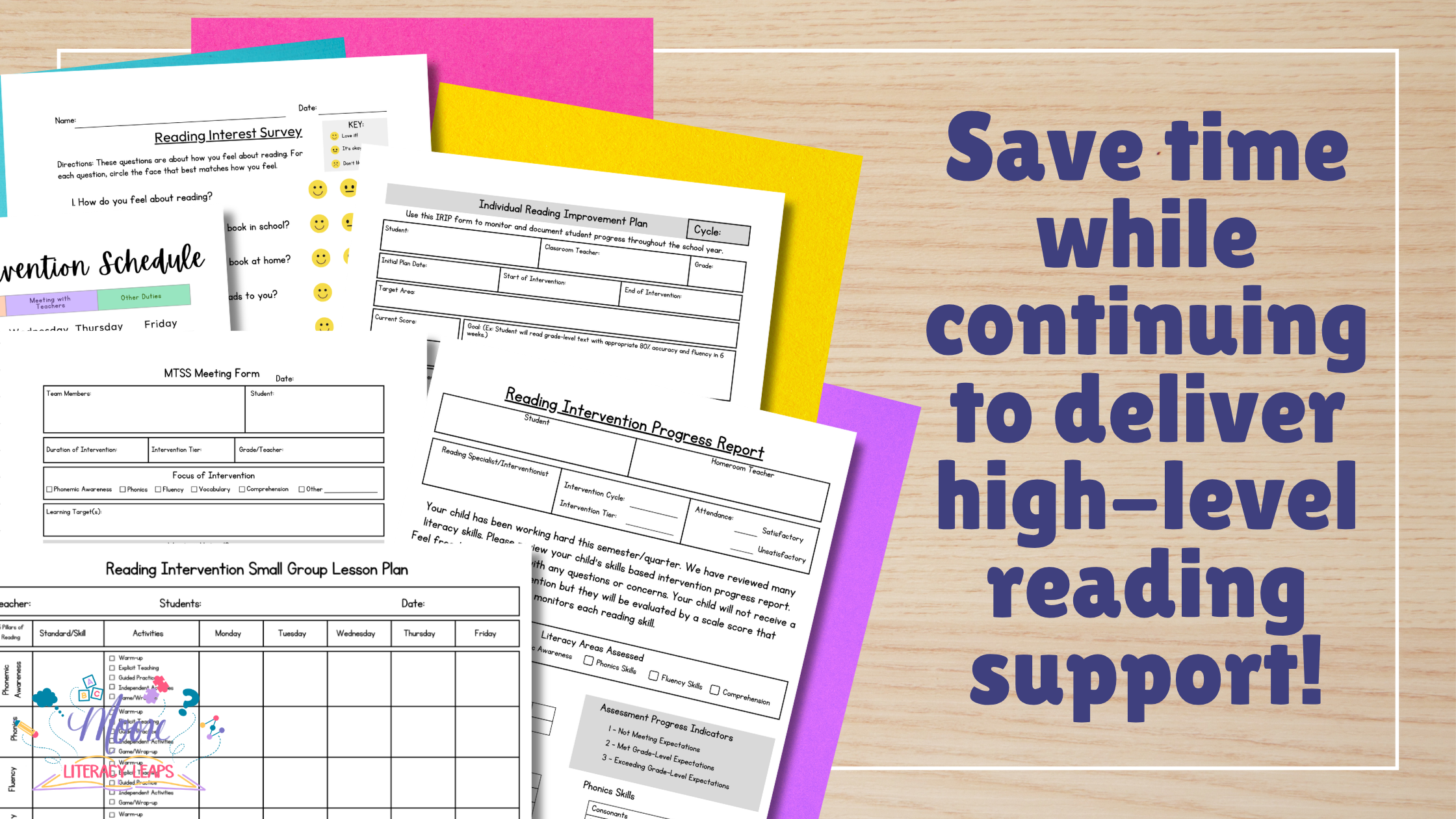
The Reading Intervention Bundle: Year-Long Support for Busy Interventionists was created to help reading specialists and interventionists organize the many moving parts of reading intervention throughout the school year.
The bundle includes tools to help with:
Reading intervention scheduling
Lesson planning
Progress monitoring
Assessment data
Intervention documentation
Anecdotal notes
MTSS meetings
Individual Reading Intervention Plans
Parent and teacher communication
Reading attitudes and interests
And more!
Shop the Reading Intervention Bundle on Teachers Pay Teachers →
Don't Feel Like You Have to Start Intervention on Day One
I know it can be tempting to feel like you should have your reading intervention groups up and running right away.
But if your school doesn't typically begin interventions until the end of September or beginning of October, use those first few weeks to your advantage!
This is your time to:
Clarify your role with your principal
Take inventory of your literacy resources
Connect with classroom teachers
Review beginning-of-the-year assessment data
Determine whether additional diagnostic assessments are needed
Build your reading intervention schedule
Create your progress monitoring system
Organize your intervention materials
The first month of school may be busy, but it is also a valuable opportunity to put your reading intervention systems and routines in place.
Do the organizing now so that when October rolls around, you can focus less on figuring out your systems and more on what really matters:
Helping your students become stronger, more confident readers!
