
3 Shifts to Make Now in Your Reading Interventions Before the End-of-Year Assessments
Testing season is fast approaching, and now is the time to make intentional shifts in your reading intervention strategies to ensure struggling readers are on track to meet end-of-year assessment goals and demonstrate measurable literacy growth. As you head into this critical time of year, small, strategic changes can make a big impact on student progress. Before end-of-year (EOY) assessments begin, I recommend focusing on three key shifts that will help maximize your intervention time and support meaningful reading growth for your students.
3 Reading Intervention Strategies to Boost Literacy Growth Before End-of-Year Assessments
#1 Create a Targeted Reading Intervention Curriculum Map for End-of-Year Success
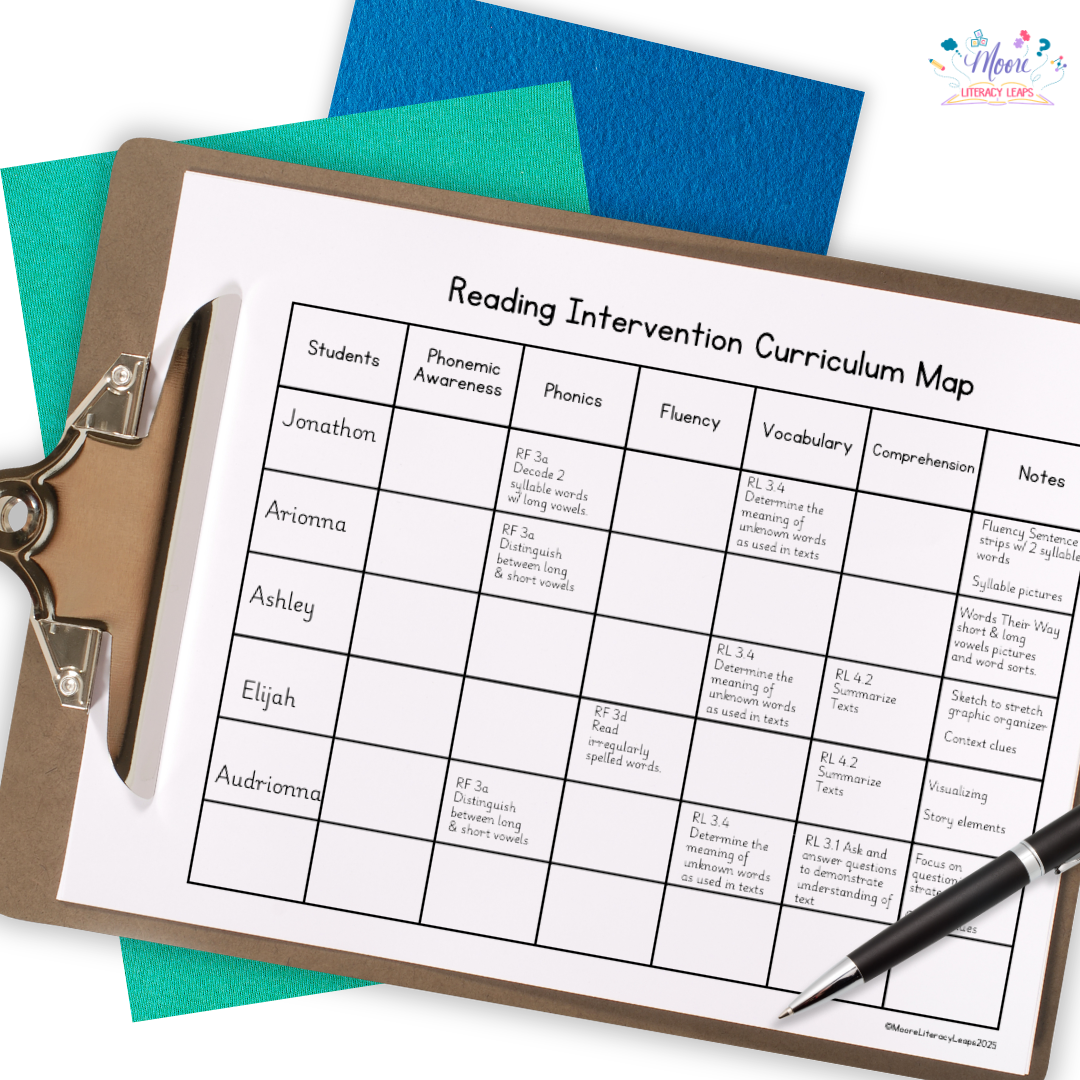
One of the most effective reading intervention strategies to implement before end-of-year assessments is creating a simple, targeted curriculum map. This acts as your roadmap for the final stretch—helping you focus on the essential literacy skills your students still need to master.
I know you might be thinking, “More planning time?” But this isn’t about doing more—it’s about being strategic. By identifying the standards your students haven’t yet mastered (or are close to mastering), you can make your intervention time more focused and impactful.
From now until testing season, these skills should drive your instruction—so every lesson supports student growth and end-of-year success.
How to Create Your Reading Intervention Curriculum Map
1. Identify the Target Standard(s)
Example: RF.3a – Decode two-syllable words with long vowels
2. Plan Targeted Activities
Use fluency word and sentence strips
Practice repeated reading
Transition to decodable readers, then authentic text
Include a word hunt for spelling patterns
3. Progress Monitor Weekly
Use dictation (words and sentences)
Give quick skill-based assessments
4. Reteach or Move On Based on Data
Mastery → move to next skill
Gaps → reteach with phonemic awareness, word sorts, and fluency practice
If you’re thinking, “This sounds great, but I don’t have time to create this from scratch…” you’re not alone. That’s exactly why I created a ready-to-use reading intervention curriculum map that helps you quickly identify target skills, plan aligned activities, and track student progress—all in one place.
#2 Align Your Reading Interventions with Classroom Instruction (MTSS Tier 2 Support)
Another high-impact reading intervention strategy to focus on before end-of-year assessments is aligning your intervention instruction with what’s happening in the classroom. This step is critical for ensuring your students are getting the right kind of support—not just more instruction, but targeted, strategic intervention that accelerates literacy growth.
Plan a quick check-in with your classroom teachers to make sure you’re aligned on instructional pacing, standards, and student needs. This doesn’t have to be a long meeting—but it should be intentional.
As Stephanie Stollar explains through the concept of “core + more,” Tier 1 classroom instruction is the core, and your intervention time is the “more.” That means your intervention block should focus on reinforcing and strengthening essential skills—not introducing brand-new standards students haven’t been exposed to yet.
To make the most of your intervention time, use this meeting to clarify:
What reading skills and standards have already been taught?
Which skills are your intervention students still struggling with?
Has the classroom teacher adjusted their pacing or scope and sequence?
Staying aligned ensures your intervention lessons provide meaningful review and targeted practice, helping students build confidence and mastery before testing season.
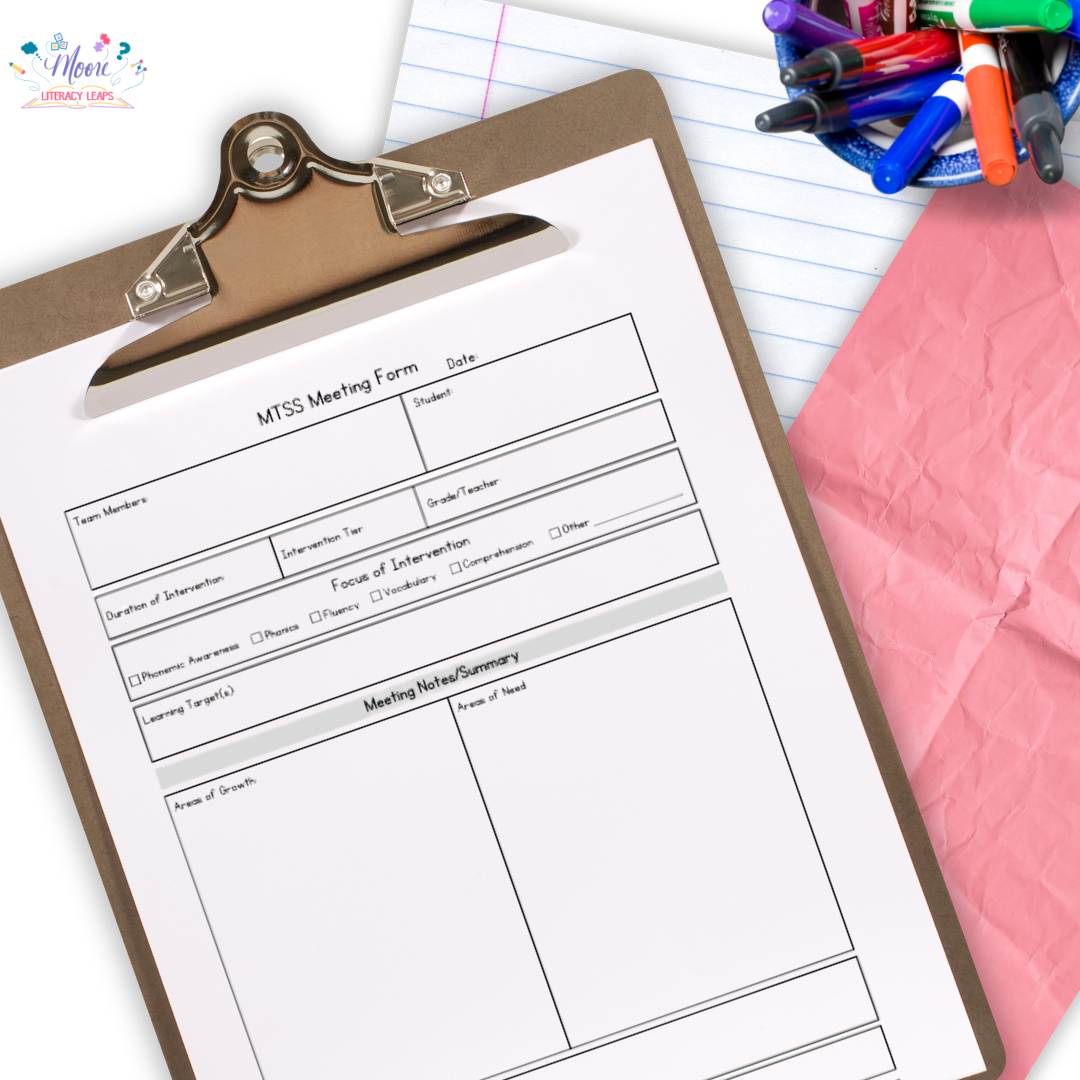
Here’s a quick tip - save time with structured MTSS Meeting Notes! Not sure how to set these up? Use mine! Click the link below to download the meeting notes template I use to organize conversations, track student needs, and stay aligned with classroom instruction.
#3 Adjust Your Reading Intervention Instruction to Increase Rigor
As you get closer to end-of-year assessments, one of the most important reading intervention strategies is knowing when to adjust your instruction. If students have already mastered a skill, it’s essential to move forward—rather than spending valuable intervention time reviewing what they already know.
This can feel like a big shift. For example…
If your students have been working on decoding two-syllable words with long vowels, it’s easy to stay in the comfort zone of decodable texts. And while decodable readers absolutely have their place in phonics instruction, they shouldn’t be the end goal.
Once students demonstrate mastery, it’s time to increase rigor and begin transferring those skills to real reading experiences. This is where authentic text comes in.
Instead of staying in controlled text, start incorporating authentic texts that naturally include the phonics patterns you’ve been teaching. This helps students apply their learning in meaningful ways and better prepares them for end-of-year reading assessments.
Here are a few simple ways to make this shift:
Choose authentic texts that include targeted phonics patterns
Transition from decodable readers to early chapter books and leveled text
Continue fluency practice through partner reading or independent reading
Incorporate word hunts to reinforce specific phonics skills in real text
Great book series to support this transition:
Henry and Mudge
Cam Jansen
A to Z Mysteries
Making this shift helps bridge the gap between phonics instruction and real-world reading, giving students the confidence and skills they need to succeed beyond intervention—and on their end-of-year assessments.
Final Thoughts: Small Shifts, Big Growth Before End-of-Year Assessments
As end-of-year assessments approach, it’s easy to feel like time is running out—but meaningful literacy growth doesn’t come from doing more. It comes from doing what matters most.
By focusing on these three simple shifts—creating a targeted plan, aligning with classroom instruction, and adjusting your teaching based on student mastery—you’re making your reading interventions more intentional, efficient, and impactful.
Remember, your goal isn’t perfection before testing season. It’s progress.
Even small, strategic changes to your reading intervention instruction can help your students build confidence, strengthen foundational skills, and show what they truly know when it matters most.
Finish the year strong, knowing that the work you’re doing right now is making a difference—one reader at a time.

