
Progress Monitoring Data Analysis: The 5 Ws Every Reading Interventionist Needs
Often, when we talk about analyzing student data, the focus is on benchmark assessments. You know the work—the “special” data days where you sit with your PLC team, surrounded by stacks of papers, while a spreadsheet is projected on the screen.
And yes, that work is important. But too often, we forget to analyze progress monitoring data, the very data that directly informs our instruction.
I’m not saying you need full-blown, structured data sessions for every weekly assessment—but you should be reviewing this data closely. Progress monitoring data helps you target interventions, track student growth, and ensure your instruction is making a difference. (For context, benchmark and state assessments are usually tied to AYP—adequate yearly progress—teacher evaluations, or initial placement in intervention.)
Because progress monitoring is so closely tied to day-to-day instruction, reviewing this data is critical.
To help you get started, I’ve created a set of questions to guide you through the assessment process and ensure your data analysis is purposeful and actionable.
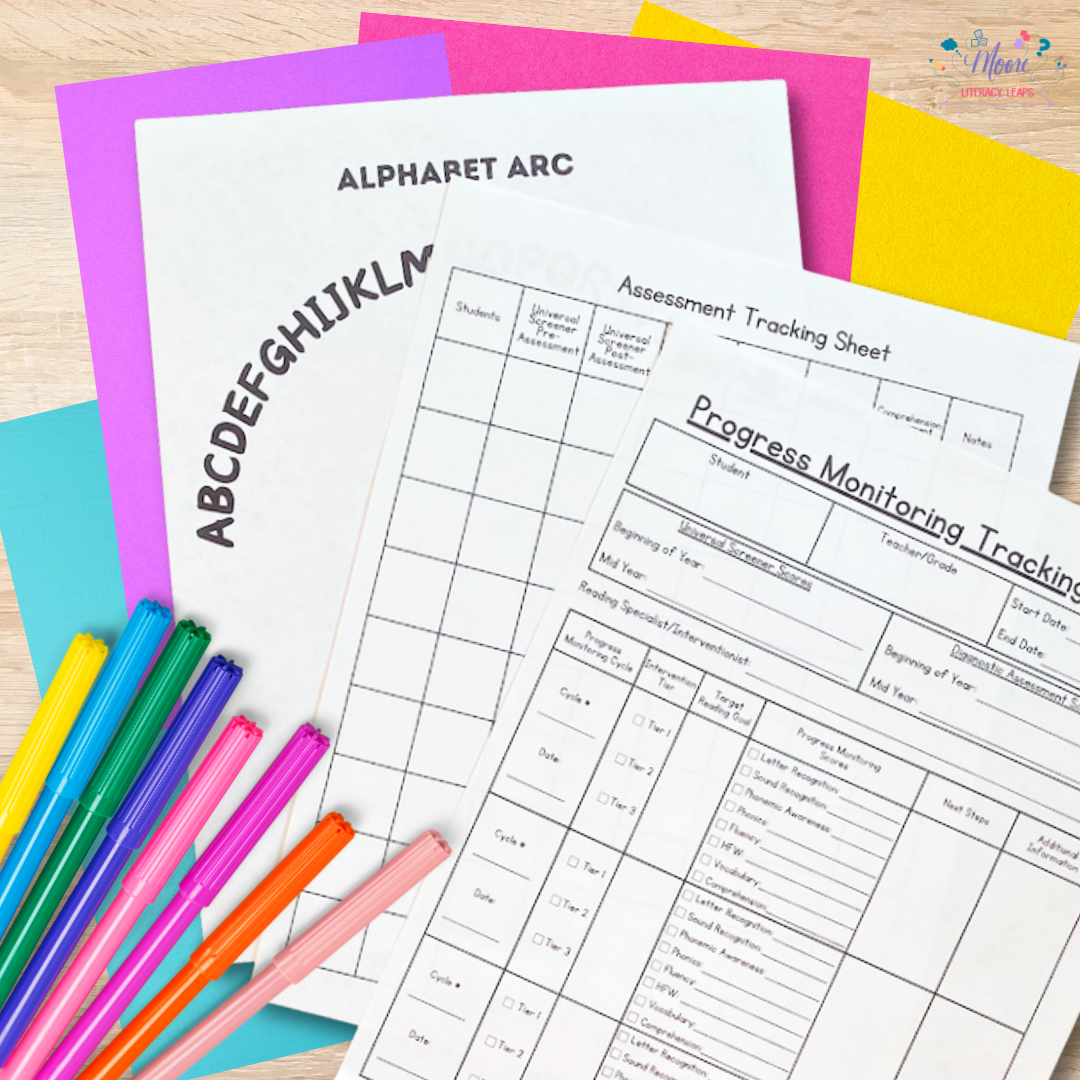
If you’re already thinking about how to better organize your progress monitoring data, having the right tools makes all the difference. I’ve created a Reading Intervention Progress Monitoring Assessment Bundle to help reading specialists and interventionists track student growth and make data-informed decisions with confidence.
How to Analyze Progress Monitoring Data for Effective Reading Interventions
1. Who Is Responsible for Progress Monitoring Assessments?
Not every school district has a clear schedule for administering progress monitoring assessments. Sometimes classroom teachers handle it, sometimes interventionists, and sometimes it falls solely on reading specialists.
Before you begin, clarify with your administration who will be responsible for administering these assessments. If it’s your role, ask whether you’ll have support from paraprofessionals or if teachers are expected to test their own students. Knowing this upfront ensures your reading intervention data is accurate and reliable.
2. What Data Points Will Be Used?
When reviewing student progress, it’s important to understand what data points are being collected. While benchmark assessments are summative and assess a semester’s worth of standards, progress monitoring assessments provide ongoing, formative data tied to current instruction.
Many assessment programs have built-in progress monitoring tools—if your school uses them, make sure they align with the standards taught during the current intervention period. Adhering to district requirements while using this data-driven approach ensures your interventions remain targeted and effective.
3. Where Will the Assessments Take Place?
Even though progress monitoring assessments are brief, location matters. A quiet, distraction-free environment will give the most accurate results. If you’re testing students, determine whether they will come to your space or if you need to reserve another location. If classroom teachers are involved, consider offering to test your caseload for them to ensure consistent, reliable data.
4. Why Monitor Progress?
Sometimes it’s easy to lose sight of why we are assessing students. Progress monitoring data helps identify which standards students have mastered, which are emerging, and which need more support. Using this data allows you to plan targeted reading interventions and make informed decisions about instruction, ensuring every student gets the support they need.
5. When Should Assessments Be Given?
Benchmark assessments typically occur three times per year, but many schools lack a consistent progress monitoring schedule. Most districts recommend progress monitoring every 2–4 weeks or 6–8 weeks, depending on the intervention framework. Frequent monitoring keeps you up-to-date on student growth and allows you to adjust interventions based on real-time data.
6. How to Analyze Progress Monitoring Data
All too often, progress monitoring assessments are administered simply to be compliant, and the data “sits on a shelf.” Treat it like any other assessment: schedule data review days, analyze the results carefully, and use them to inform instruction and adjust interventions. Consistent analysis of this data ensures your reading interventions are effective and student growth is measurable.
Keeping up with progress monitoring data doesn’t have to feel overwhelming or time-consuming. If you want an organized, easy-to-use system for tracking student growth and making data-informed decisions, my Reading Intervention Progress Monitoring Assessment Bundle was created specifically for reading specialists and interventionists. It includes tools to help you collect, analyze, and use progress monitoring data with confidence—without letting it collect dust on a shelf.
Assessment Glossary: Common Reading and Intervention Assessment Terms
Benchmark Assessments
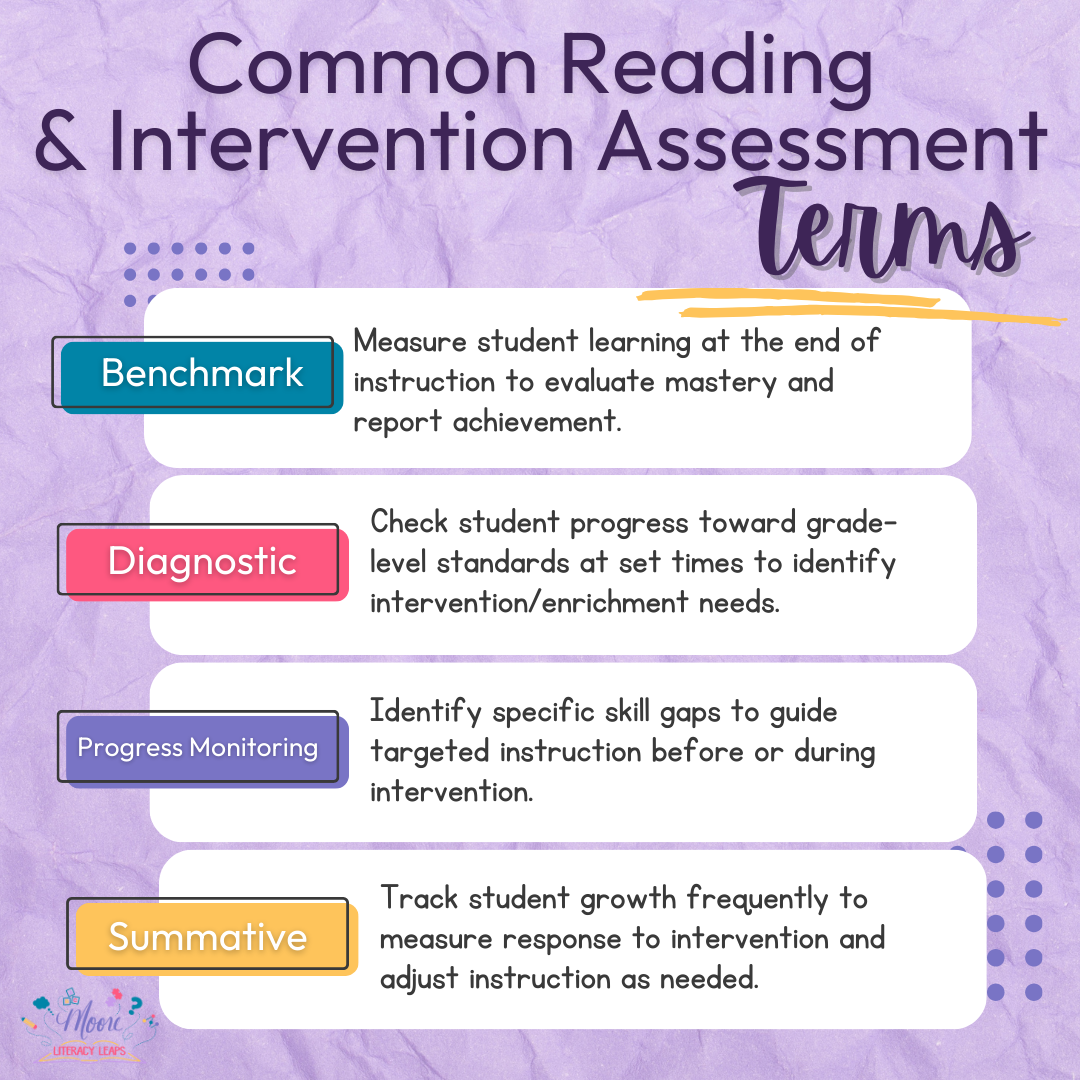
Benchmark assessments are given at set times during the school year, typically fall, winter, and spring, to measure progress toward grade-level standards. They are commonly used to identify students who may need intervention and to inform placement and instructional decisions.
Diagnostic Assessments
Diagnostic assessments identify specific skill gaps by providing detailed information about a student’s strengths and areas of need. They are used before or during interventions to guide targeted instruction and select appropriate instructional strategies.
Progress Monitoring
Progress monitoring is the frequent assessment of student performance to track growth over time and evaluate the effectiveness of instruction or interventions. It is used regularly throughout an intervention cycle to make data-informed decisions and adjust instruction as needed.
Summative Assessments
Summative assessments measure student learning at the end of a unit, semester, or school year to evaluate overall mastery of standards. They are used to report achievement, determine grades, and evaluate program effectiveness after instruction has been completed.
Using Progress Monitoring Data to Make Informed Instructional Decisions
Analyzing progress monitoring data is more than a compliance task—it is a critical part of making informed instructional decisions. When reviewed regularly, this data provides valuable insight into student growth, helps determine whether interventions are effective, and guides next steps for instruction. By intentionally considering the who, what, when, where, why, and how of progress monitoring, reading specialists and interventionists can move beyond collecting data and begin using it to drive meaningful, targeted support that leads to improved student outcomes.
